
Pilot Kit for LEO
Pilot Kit for Starlink Mini
Portable LEO connectivity, engineered for aircraft
Our Pilot Kit is an aviation-engineered mounting, restraint, power, and connectivity solution designed for use with Starlink Mini equipment, with integration options for Amazon Leo and Viasat satellite terminals.
- Starlink Mini
- Amazon Leo
- Viasat
- Single / Dual Terminal Options
- Optional SkyFi6 Integration
- DO-160G Section 21 EMI Tested
- Supports FAA AC 91.21-1D
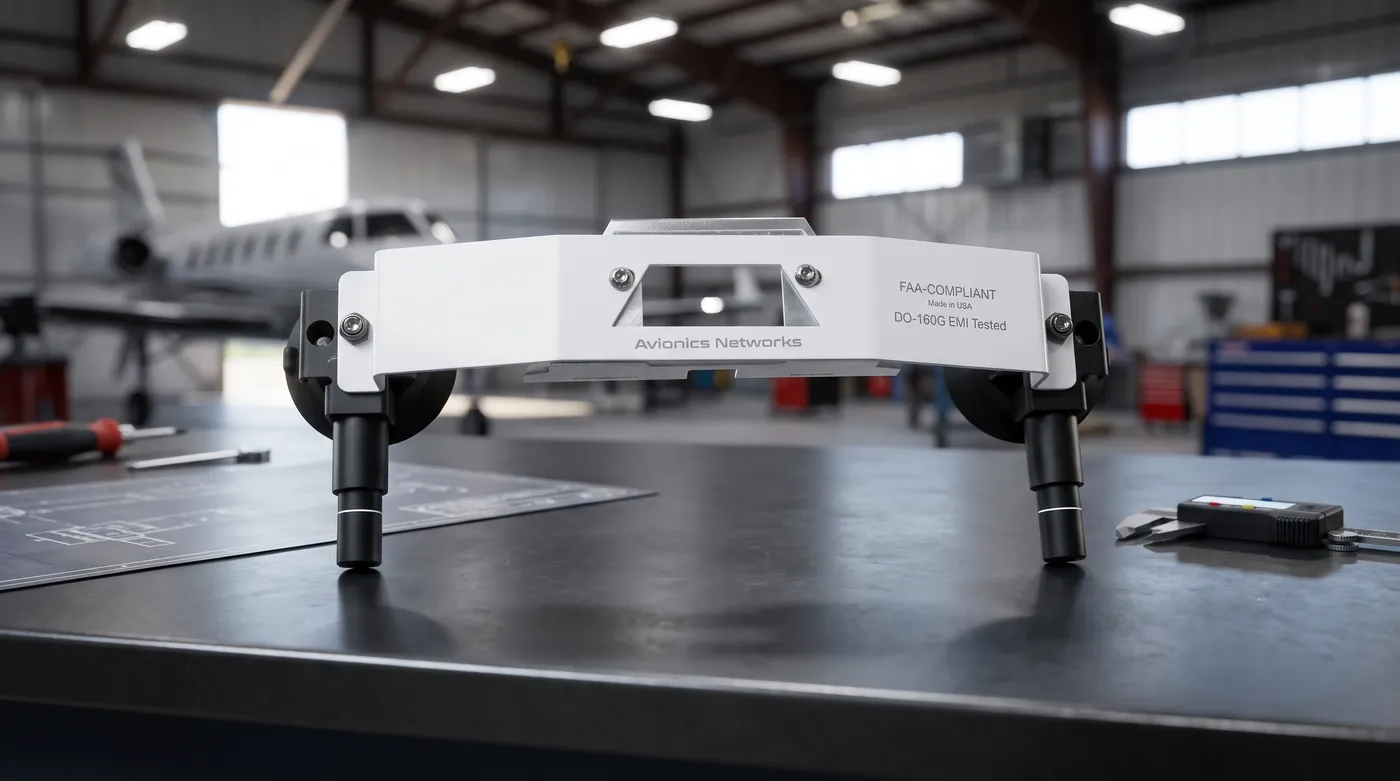
Engineered for safety
Aviation Connectivity Engineered for Safety
RTCA DO-160G Section 21 EMI TestedDesigned for FAA AC 91.21-1D PED Operations
Aircraft RF immunity is only half the equation.
A T-PED STC evaluates an aircraft's tolerance to specified radio-frequency interference from portable electronic devices. However, it does not automatically establish that every satellite terminal introduced into the cockpit has acceptable electromagnetic emissions.
Satellite terminals and associated electronic equipment can generate harmonics, spurs (spurious emissions), broadband RF noise, and conducted or radiated interference that could affect sensitive avionics and aircraft systems.
That's why Avionics Networks goes a step further. We test our defined Pilot Kit configuration to RTCA DO-160G Section 21, evaluating electromagnetic emissions rather than relying solely on the aircraft's RF immunity assessment.
Aircraft side · RF immunity
What your aircraft can tolerate
Evaluated by a T-PED STC
Equipment side · Emissions
What your connectivity equipment actually emits
Tested by Avionics Networks to RTCA DO-160G Section 21
Many things can change a transmitter after it leaves the factory.
A terminal is designed and certified for its own market. In the field, its power source, cabling, software, age and accessories can all change what it emits, including harmonics and spurs that land in the bands your avionics listen to.
After it leaves the factory
Because protecting your aircraft means understanding both sides of the equation: what your aircraft can tolerate and what your connectivity equipment actually emits.
At Avionics Networks, aircraft safety and airworthiness are part of our engineering process, not an afterthought.
Where it started
We pioneered Starlink Mini kits for aircraft.
Our very first Pilot Kit, V1, flew at the copilot window of an Embraer Phenom 300. It proved the idea, and it was bulky. Today's V3 is much more streamlined and efficient.
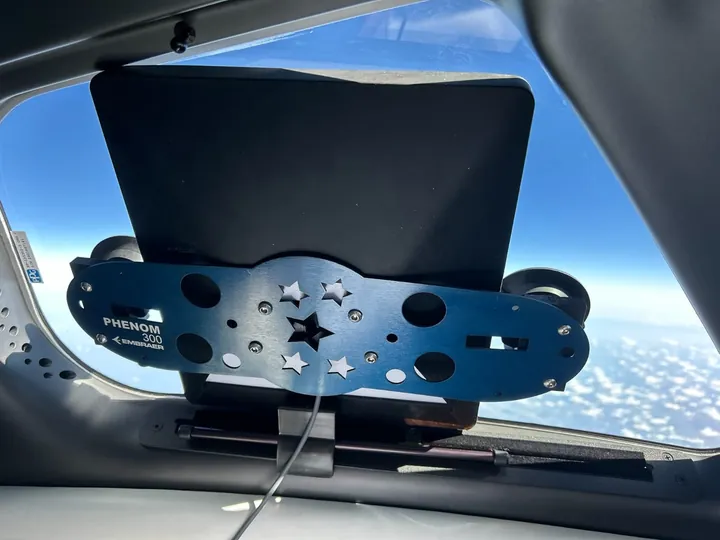 V1 · 2025
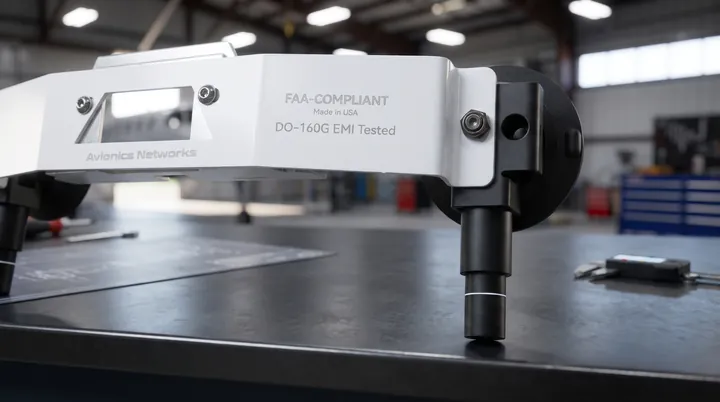 V3 · today
AIN covered our first Starlink Mini aircraft kits in April 2025. Read the AIN article
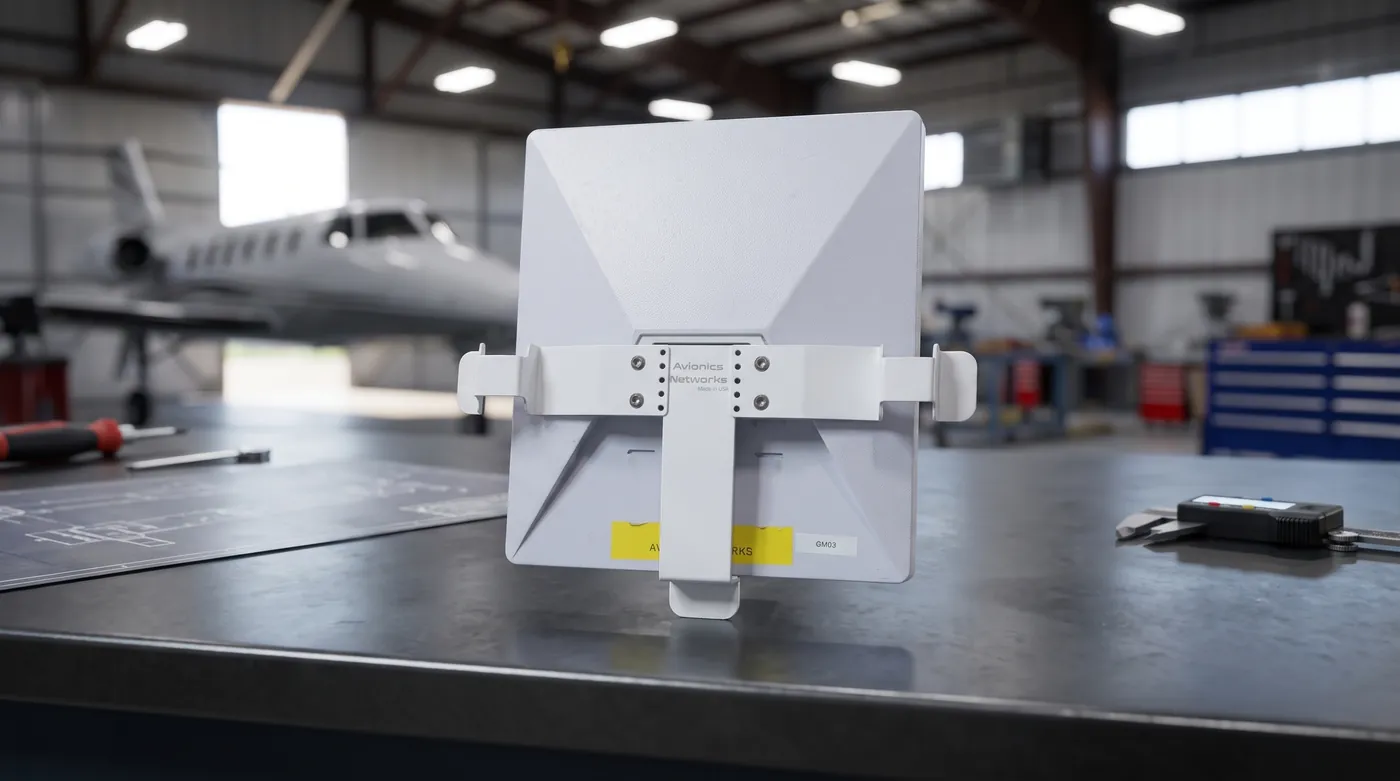 M5 · patent pending
What we learned
One mount does not fit every aircraft.
Over time we learned that a single mount cannot cover every cabin. Glareshields, panel C windows, and cabin windows of every size and shape each need their own answer. So we adapted.
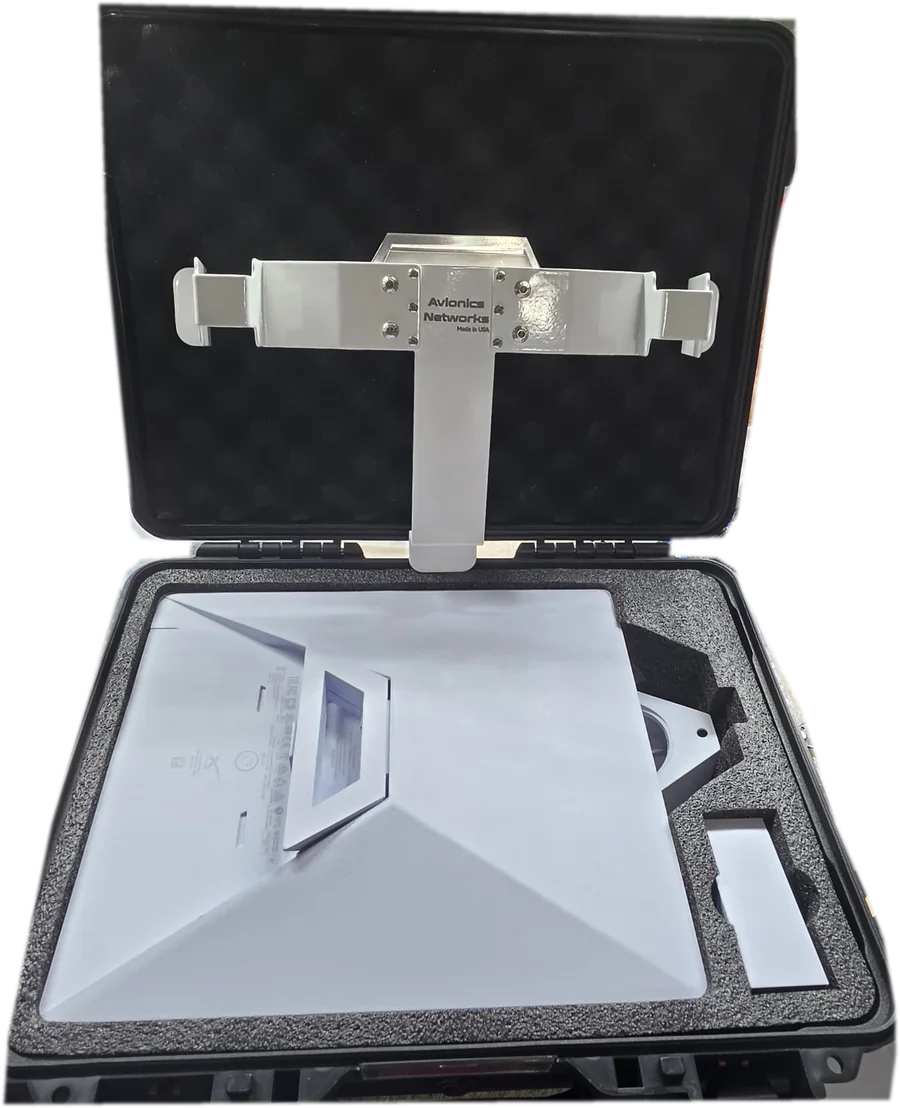
Today Avionics Networks offers a wide line of patent-pending mounts, and their variations:
- V3
- M5-STD
- M5-Custom
- M9
- M11
We customize our solutions to adapt to any mission requirement.
Find the mount for my aircraftEngineering
You aren't buying a mount.
We are aviation engineers designing satcom solutions, and we engineer them to aerospace standards, including DO-160G. Every Pilot Kit is designed around the terminal, the window and the cabin it will fly in, before a single part is made.
This is one of our designs: the frame, the linkage and the terminal angle, engineered for the aircraft.
When the mission needs it, an engineering project can include DO-160G EMI qualification, and even a T-PED Wi-Fi immunity STC.
Tell us the aircraft and the mission. We engineer the kit.
Talk to our engineersMore than a mount
Starlink Mini for airplanes, done properly.
Portable satellite connectivity aboard aircraft involves more than holding a terminal near a window. Cabin geometry, mounting, restraint, power availability, cable management and onboard Wi-Fi all affect the practical installation.
Aircraft-oriented configuration
Aircraft-specific mounts, restraint, power accessories and cable guidance, in removable configurations designed for the cabin you fly.
EMI documentation
DO-160G Section 21 EMI test documentation for a specific, controlled Pilot Kit configuration, to support the operator's own PED determination.
Managed onboard Wi-Fi
Add our SkyFi6 Smart Aviation Wi-Fi Router to separate crew and passenger networks, prioritize applications and control usage.
Designed for aviation
Built for the cockpit. Not for the campsite.
Most terminal mounts are made for camping, beaches, boats and vacation homes. An aircraft cabin is a different environment, and Pilot Kit was designed for it from the first sketch.
Consumer accessories
- Designed for campsites, beaches, RVs and vacation homes
- Materials and suppliers you cannot trace
- No aviation emissions testing
- No engineering for cabin windows, restraint or aircraft power
Pilot Kit
- Designed for aircraft cabins and the people who fly them
- Controlled materials quality from known suppliers
- Proprietary, patent-pending designs by Avionics Networks
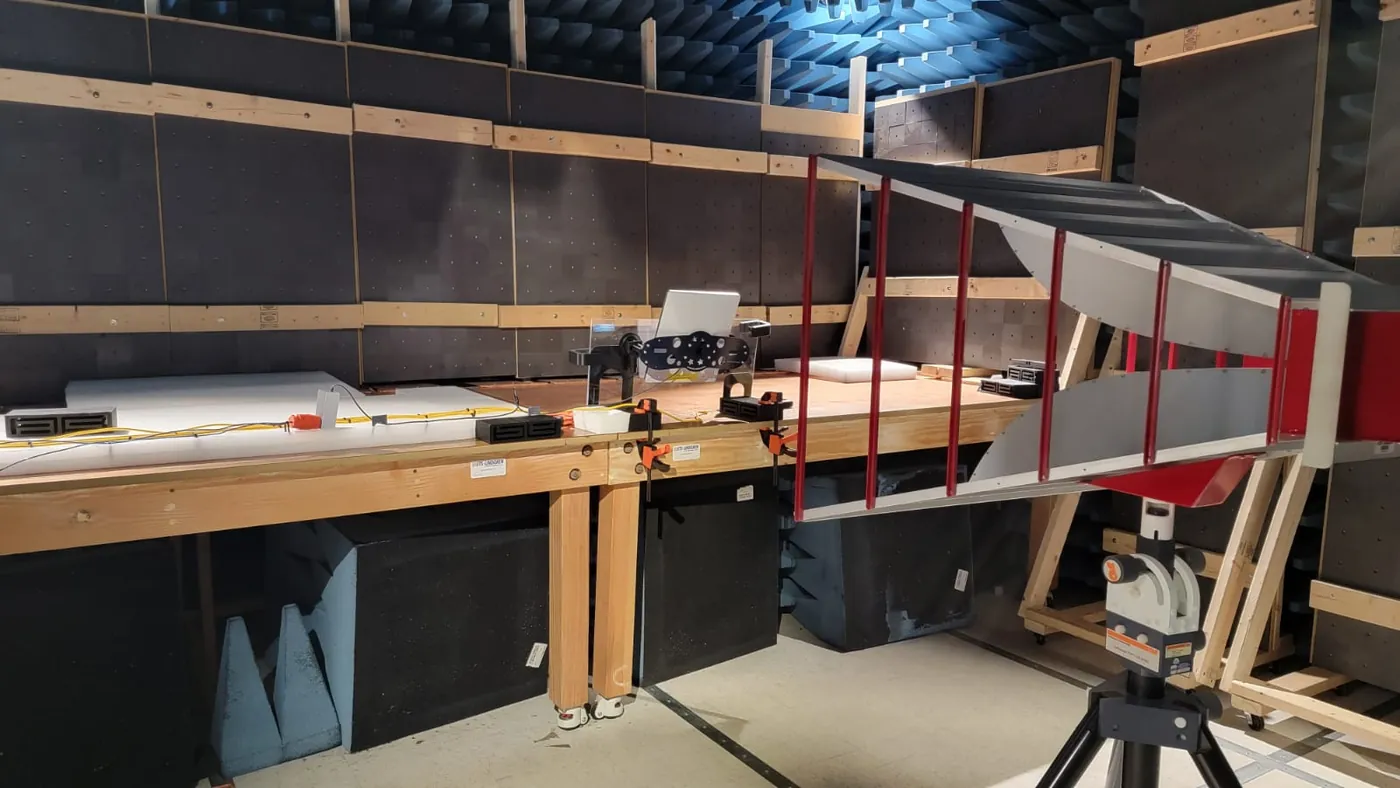
- DO-160G Section 21 EMI tested at an accredited laboratory
- Test report copy and right to use it, with every kit
- Engineered to support FAA AC 91.21-1D PED compliance
Compliance
Designed around FAA AC 91.21-1D.
Under 14 CFR 91.21, the operator must determine that a portable electronic device will not interfere with the aircraft's navigation and communication systems. FAA Advisory Circular 91.21-1D sets out how to make that determination.
Our proprietary, patent-pending Pilot Kit designs are engineered to support it, and they are backed by test data, not marketing claims.
Lockheed Martin is a customer of the laboratory and is named only to describe the laboratory's work. It is not affiliated with and does not endorse Avionics Networks or Pilot Kit.
In the cabin
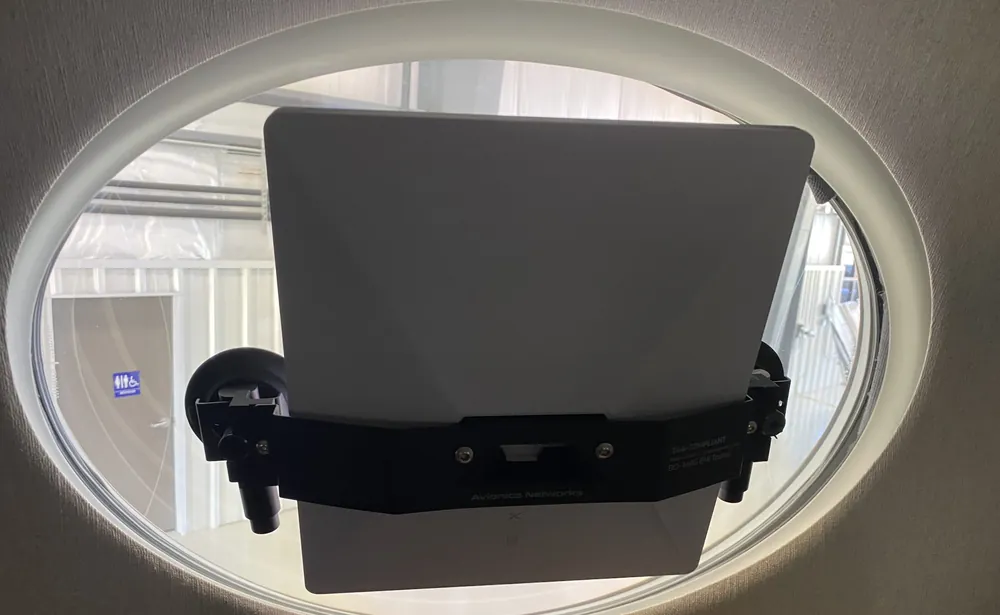
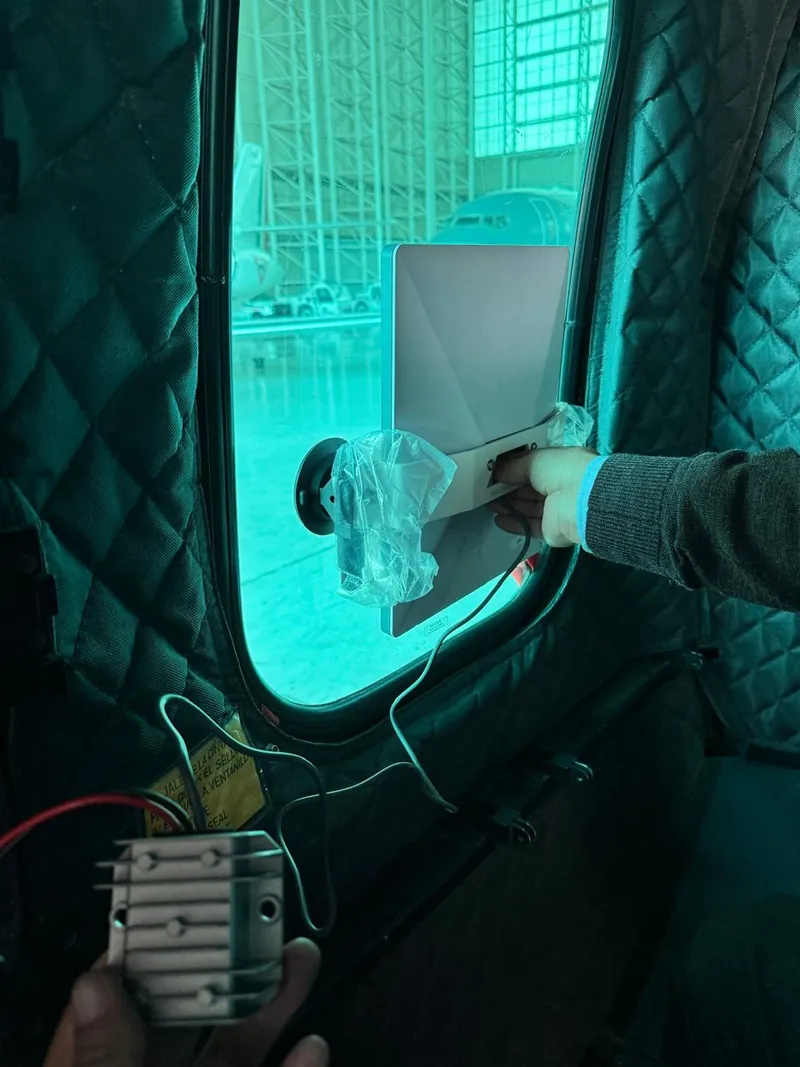
Business jets, turboprops and helicopters.
Every cabin window is different. We engineer the bracket, restraint and power for the aircraft, so the terminal stays put and sees the sky.
Low earth orbit
Through the cabin window, to the constellation.
Low-earth-orbit satellites pass overhead in minutes, and the terminal hands its link from one to the next. Mounting position, the view through the window and restraint all shape how well that works in flight.
We design Pilot Kit configurations around those realities for each aircraft, so the terminal stays secure and sees as much sky as the cabin allows.
Network agnostic
Starlink Mini first. Not Starlink only.
Pilot Kit is engineered around the terminal, not tied to one network. Choose the service that fits your aircraft and mission, and we configure the kit to match.
LEO
Starlink Mini
Our leading Pilot Kit configuration: mounts, restraint, power and cabling designed for use with the Starlink Mini kit, in single and dual-terminal arrangements.
Terminal and service purchased directly from Starlink.LEO
Amazon Leo
Pilot Kit configurations compatible with Amazon Leo terminals. Ask us about timing and options for your aircraft.
Terminal and service purchased from the provider.Satellite
Viasat
Pilot Kit configurations compatible with Viasat terminals, defined with our engineers for the aircraft and service.
Terminal and service purchased from the provider.Configuration
Single and dual Starlink Mini aircraft configurations.
One terminal or two, straight to your devices or managed by SkyFi6. Build the setup and see how it connects.
Pilot Kit across aircraft platforms.
We configure Pilot Kit for the Embraer Phenom family, Pilatus PC-12 and PC-24, TBM, Citation, Learjet, Challenger and Gulfstream families, and rotorcraft. Don't see your aircraft? Call us.
Independent support
Questions, answered plainly.
Starlink Mini hardware and Starlink service subscriptions are purchased directly by the customer from Starlink. Avionics Networks does not resell Starlink hardware or subscriptions. After a Pilot Kit order, we can guide customers through configuration and service activation and, with explicit customer authorization, provide ongoing network administration.
Does Pilot Kit include the Starlink Mini terminal?
No. Customers purchase their terminal directly from Starlink.
Does it include Starlink service?
No. Subscription selection, payment and activation occur through Starlink's official channels.
Which networks does the Pilot Kit work with?
Pilot Kit is network agnostic. Our leading configuration is designed for use with Starlink Mini, and Pilot Kit configurations are compatible with Amazon Leo and Viasat terminals. Availability of each service for aviation use is set by the provider.
Is it an FAA-approved STC installation?
A portable PED configuration is not automatically an STC installation. Applicability and operator authorization depend on the aircraft, intended use and regulations. Ask us about aircraft-specific engineering support.
Does Pilot Kit help with FAA AC 91.21-1D compliance?
Yes. Our proprietary, patent-pending Pilot Kit designs are engineered to support the operator's PED determination under 14 CFR 91.21 and FAA Advisory Circular 91.21-1D. They were DO-160G Section 21 emissions tested at an accredited laboratory, and every Pilot Kit purchase includes a copy of the test report and the right to use it. The determination itself remains the operator's responsibility.
How is Pilot Kit different from a consumer Starlink Mini mount?
Consumer mounts are made for camping, beaches, RVs and vacation homes, often with materials and suppliers you cannot trace. Pilot Kit is designed for aircraft cabins, built with controlled materials quality and EMI tested to DO-160G Section 21.
Can you support dual terminals?
Yes, selected configurations can be engineered to support two customer-provided terminals with onboard networking options.
Can Avionics Networks manage the network after installation?
After a Pilot Kit order we can guide configuration and service activation and, with explicit customer authorization, provide ongoing network administration.
Ready to connect your cabin?
Tell us the aircraft and the network you plan to use. We'll define the right Pilot Kit configuration.